




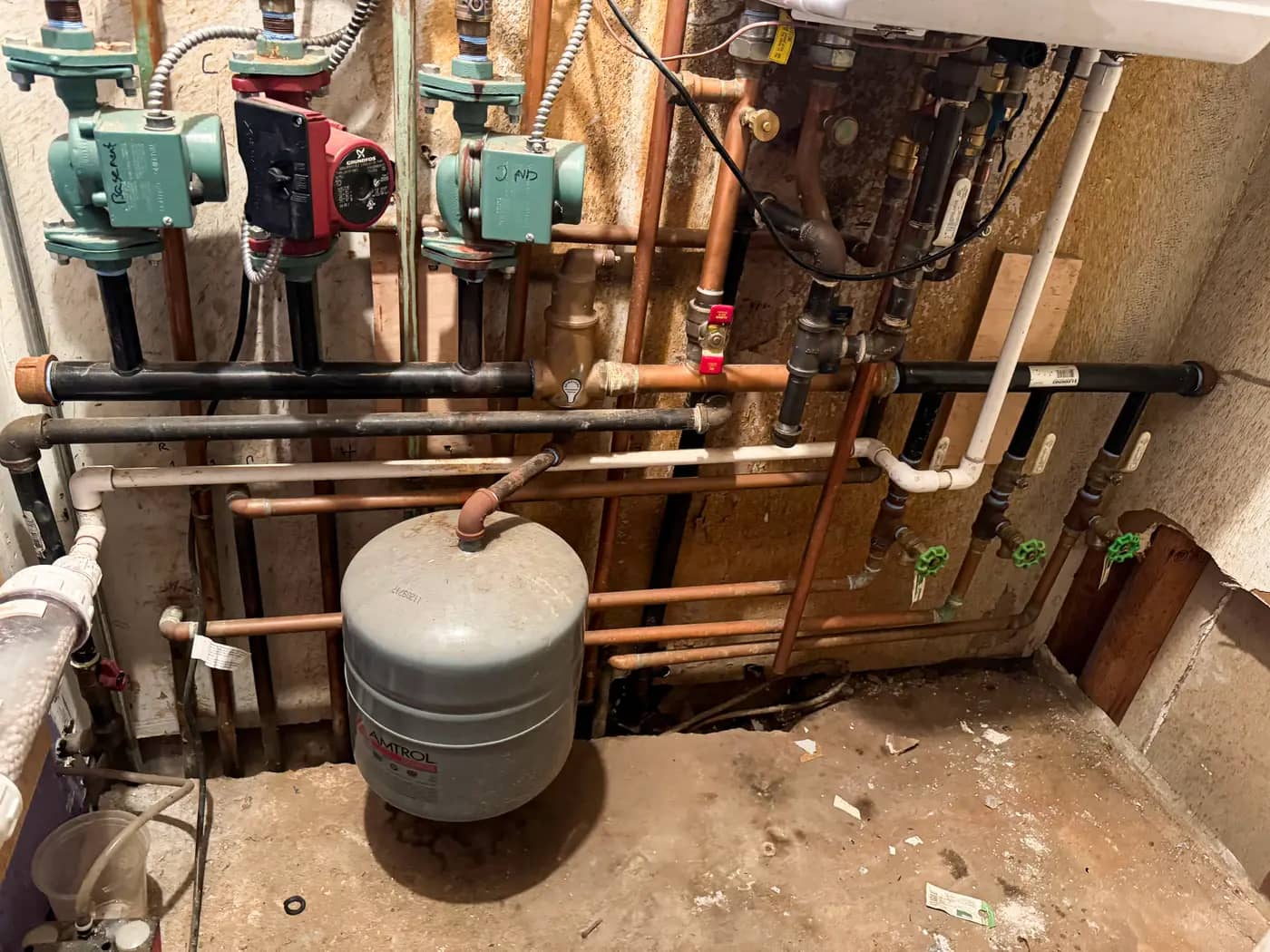


If your boiler keeps losing pressure, water is getting out of the heating system somewhere. On most Long Island homes the cause is one of three things: a failing expansion tank, a relief valve that is letting water through, or a leak in the pipes, radiators or the boiler itself. The first two are ordinary repairs. Only the last one ever turns into a conversation about a new boiler.
This guide is about hot-water systems — the kind with baseboard, cast iron radiators or radiant floors, and a round pressure gauge on the boiler. If yours has a glass tube showing a water level, it is a steam boiler and works differently. Call us and we will talk you through that one.
What the pressure gauge should read
On most homes the gauge sits somewhere around 12 to 15 psi with the system cold, and climbs a few pounds once the heat has been running. The relief valve on the side of the boiler is set to open at 30 psi so the system can never build up dangerous pressure. The exact cold figure depends on how tall your house is, so treat those numbers as a guide, not a rule.
What matters more than the number is the pattern. A gauge that holds steady all season is healthy. A gauge that drifts down over days or weeks, until the boiler locks out or the upstairs radiators go cold, is losing water.

The usual causes, most likely first
- A waterlogged expansion tank. Water expands as it heats. The tank gives it somewhere to go. When the tank fails, pressure spikes every time the boiler fires, the relief valve opens to protect the system, and water goes down the drain. Then the system cools, pressure falls below where it started, and the cycle repeats.
- A relief valve that is weeping. Sometimes the valve itself is worn and lets water past at normal pressure. Look for drips or a damp trail at the end of the pipe running down from the valve.
- A fill valve that is not doing its job. Most systems have an automatic feed that tops the water up. If it is shut off or has failed, small, normal losses never get replaced.
- A leak. A weeping fitting, a corroded baseboard section, a radiator valve, or a leak inside the boiler. Some leaks show up as a stain on a ceiling. Some never show at all.
Why topping it up is the wrong fix
It is tempting to open the fill valve every few days and carry on. The trouble is that every top-up brings in fresh water full of oxygen, and oxygen is what corrodes the inside of a heating system: the pipes, the circulator and the boiler itself. A system that is topped up weekly ages much faster than one that is sealed and left alone. The problem you are covering up is making itself worse.
The leak you cannot see
Thousands of Long Island houses built after the war were heated by copper pipe set into the concrete floor slab. In those homes — Levittown above all — a slow pressure loss with no visible water anywhere can mean a leak under the floor, where the water drains into the ground instead of onto the carpet. We wrote about what that means, and what can be done about it, on our Hempstead plumbing page and our radiant floor heating page.
What a proper diagnosis looks like
When we come out for pressure loss, we check the expansion tank charge, watch what the pressure does as the boiler heats up, check the relief valve and fill valve, and trace the system for leaks. In most cases the answer is a part, not a boiler. A tank, a valve or a fitting is a repair visit. If the leak turns out to be inside the boiler itself, that is the point where repair stops making sense, and we will tell you so plainly.
Because we are plumbers as well as heating technicians, a leak in a pipe behind a wall or under a floor is the same team and the same visit. You do not get a heating company telling you to go and find a plumber.
If your boiler keeps asking for water, call us on 631-587-0085 or use the form above. You can read more about what we do on our boiler repair and service page.